No products in the cart.
What is Zardozi Art : The Royal Craft of Embroidery
In a world where fast fashion often dominates, traditional handcrafts like Zardosi embroidery stand as enduring testaments to intricate artistry and cultural heritage. Originating centuries ago, Zardosi continues to dazzle with its rich textures, metallic threads, and regal aura. This ancient embroidery technique, once reserved for royals and the elite, has found its way into contemporary fashion and décor, enchanting a new generation of admirers.
In this blog, we delve into the origin, process, evolution, and modern relevance of Zardosi art—a craft that continues to shimmer through time.
What is Zardosi?
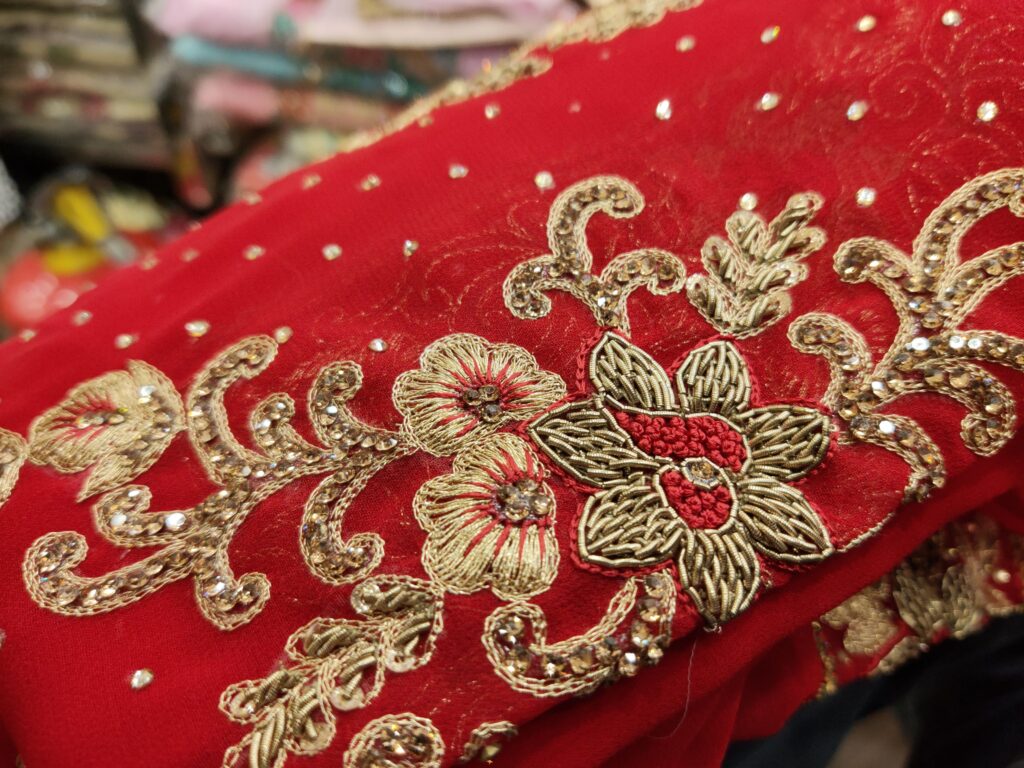
Zardosi (also spelled Zardozi) is a form of embellished embroidery that uses metallic threads—traditionally gold and silver—to create raised motifs on fabric. The word “Zardosi” is derived from Persian, where ‘Zar’ means gold and ‘Dozi’ means embroidery. Originally crafted with real gold and silver threads, the embroidery often included pearls, precious stones, and sequins, stitched onto rich fabrics like silk, velvet, and satin.
A Glimpse Into History
Zardosi dates back to ancient India, particularly flourishing during the Mughal era under Emperor Akbar’s patronage. Though the art has Persian origins, it reached its peak in India between the 16th and 18th centuries, adorning royal garments, ceremonial tents, scabbards, and even palace interiors.
After the fall of the Mughal empire and the advent of industrialization, Zardosi saw a decline—but was revived post-independence, especially in cities like Lucknow, Delhi, Mumbai, and Hyderabad.
The Zardosi Process: Where Art Meets Precision
Creating a Zardosi piece is a meticulous, labor-intensive process. Here’s how artisans bring this art to life:
- Fabric Preparation: The base fabric (often silk, velvet, or chiffon) is tightly stretched over a wooden frame known as an adda.
- Design Sketching: A detailed design is drawn on tracing paper, then transferred onto the fabric using chalk powder.
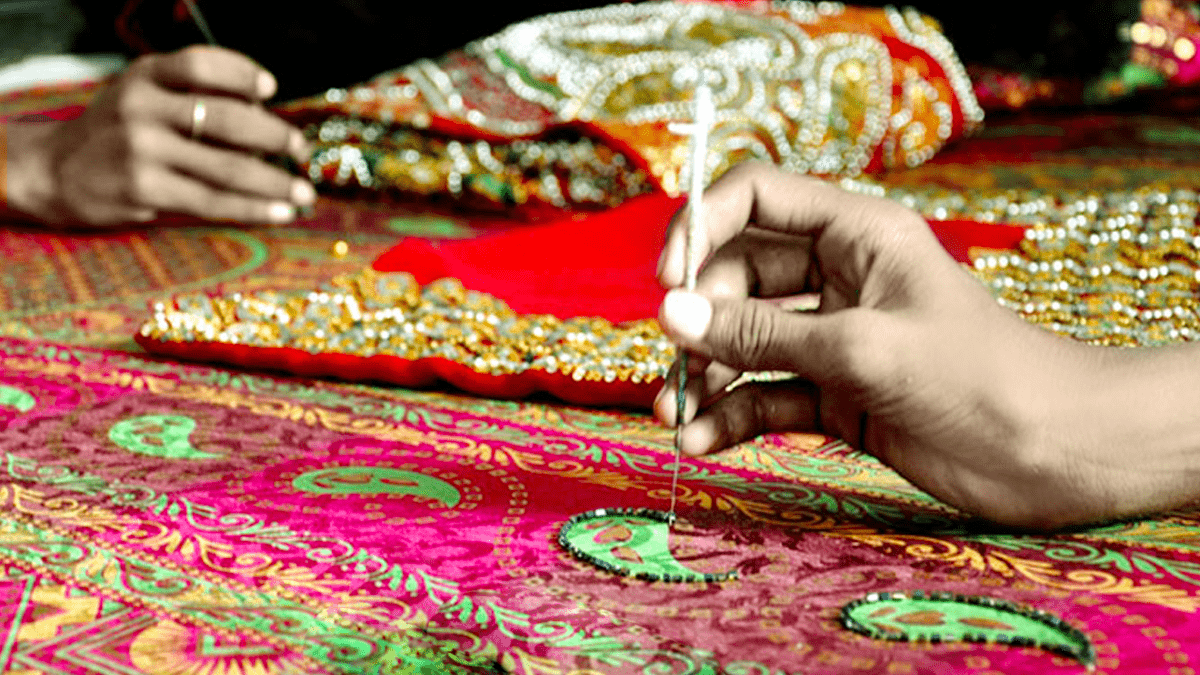
- Thread Embroidery: Artisans use a needle called ‘ari’ to hand-embroider using metallic threads made of gold or silver (or now, metallic-coated threads). Decorative elements like kundans, sequins, pearls, and beads are added for dimension.
- Finishing Touches: Once completed, the piece is carefully checked for uniformity, trimmed, and polished to highlight the metallic shimmer.
This art demands not only skill but immense patience—larger pieces can take several weeks or even months to complete.
Zardosi in Modern Times
While the original Zardosi used precious metals and stones, modern versions utilize metal-coated threads and semi-precious embellishments to make it more accessible. It has found a firm place in:
- Bridal couture – lehengas, sarees, sherwanis
- Home décor – cushion covers, wall hangings, table runners
- Accessories – bags, clutches, juttis
- Costumes – for theatre and films
Designers like Sabyasachi Mukherjee, Abu Jani Sandeep Khosla, and Manish Malhotra frequently showcase Zardosi in their collections, blending tradition with contemporary aesthetics.
Sustaining the Craft: Challenges and Revival
Despite its elegance, Zardosi faces modern-day challenges. Machine-made replicas, undervaluing of handcrafts, and declining artisan wages threaten its future. However, many NGOs, fashion houses, and government initiatives are stepping in to train artisans, promote fair trade, and ensure that this heritage craft thrives.
Consumers too play a vital role—by choosing handcrafted Zardosi products, you’re not just buying an item; you’re preserving a centuries-old tradition and supporting the livelihoods of skilled artisans.
Conclusion
Zardosi is more than just embroidery—it’s a story woven in gold and silver, a legacy of royal opulence and unmatched craftsmanship. In every stitch lies history, patience, and beauty. As fashion turns back to slow, sustainable, and meaningful design, Zardosi stands proud—a timeless reminder that true artistry never goes out of style.
💬 We’d Love to Hear From You!
Have you ever worn or seen Zardosi embroidery up close? Share your thoughts or photos in the comments below!